
Laveau doesn’t post its laws on signboards. The sheriff’s department enforces whatever serves them. The courts answer to money. The real rules — the ones that keep you alive — are never written down.
But they exist. And everyone who survives here long enough learns them.
Power Is Quiet
The loudest person in the room is almost never the most dangerous.
In Laveau, real power doesn’t announce itself. It doesn’t threaten. It doesn’t need to. The people who actually run things speak softly, smile politely, and destroy lives with a word to the right person.
Watch for the ones who don’t raise their voice. The ones everyone else glances at before speaking. The ones who never seem worried.
What this means for your story: Restraint is more threatening than rage. A character who stays calm while making terrible promises is more frightening than one who screams. Let your power show through what you don’t have to do.
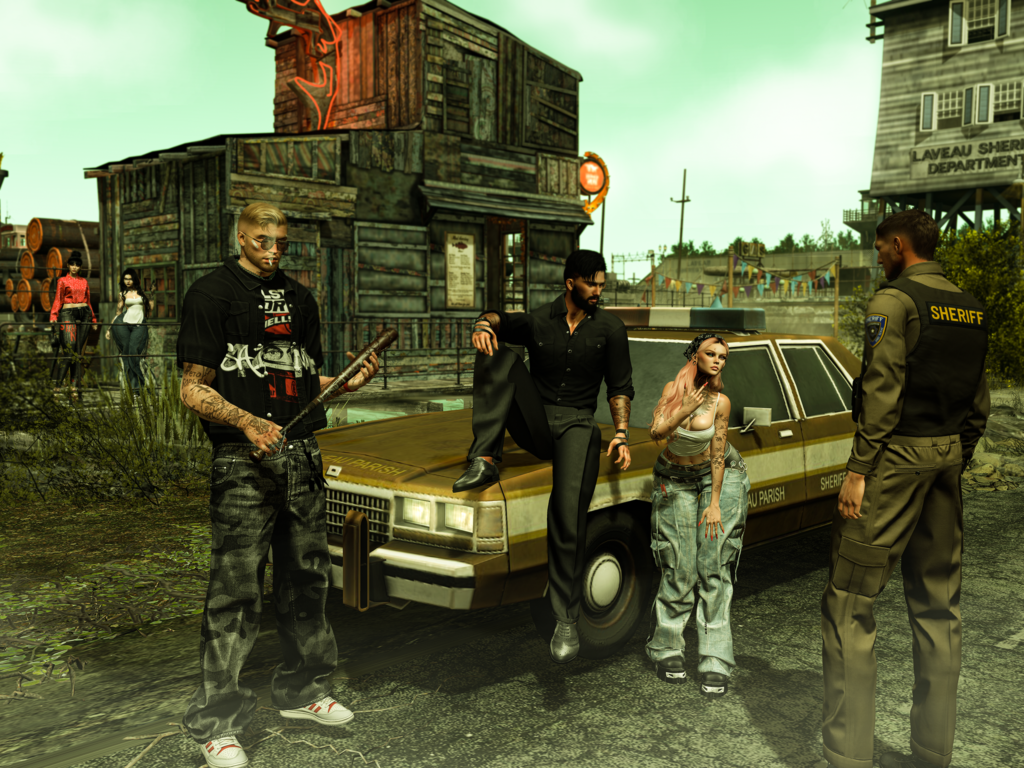
There Are No Heroes
Laveau doesn’t have good guys. It has survivors, opportunists, and corpses.
The deputy who seems decent is on the take. The preacher saving souls has his own sins. The victim you rescue today might sell you out tomorrow. Everyone in this swamp is compromised — including your character.
This isn’t cynicism. It’s freedom. When no one expects righteousness, you can write complex, flawed, morally tangled characters without apology.
What this means for your story: Don’t try to fix Laveau. Don’t play the white knight. Your character can have principles, even kindness — but the swamp will test them. The interesting question isn’t whether your character is good. It’s what they’ll do when being good costs them everything.
History Has Teeth
The past isn’t dead in Laveau. It’s not even past.
Debts carry across generations. Grudges outlive the people who started them. The thing you did three months ago — the one you thought no one saw — will surface at the worst possible moment. The swamp has a long memory, and it loves dramatic timing.
This works both ways. Favors are remembered too. The person you helped when you didn’t have to might be the one who saves you later.
What this means for your story: Your character’s past matters. Create history — debts, enemies, unfinished business. Reference things that happened before. And when other players create history with you, honor it. The callbacks and consequences are what make stories feel real.
Everyone Owes Someone
There’s no such thing as independence in Laveau. Everyone is tangled in webs of obligation, debt, and leverage.
You owe rent to a landlord who owes protection money to a crew who owes tribute to the Syndicate who owns the deputy who could make your problems disappear — for a price. Pull any thread and it connects to a dozen others.
This isn’t a bug. It’s the engine that drives every story here. Debt creates drama. Obligation creates conflict. The web creates connection.
What this means for your story: Let yourself get entangled. Owe people. Let people owe you. Accept favors you’ll have to repay. Make deals with costs you’ll regret. The characters who try to stay independent and unattached are the ones with the least interesting stories.
The Bayou Takes Its Due
Nothing in Laveau is free. Every gain has a cost. Every escape has a price. Every victory leaves a mark.
Get what you want, and something else slips away. Save yourself, and someone else pays. Rise in power, and watch what you become to get there.
This is the fundamental transaction of the swamp. It gives freely — opportunity, freedom, reinvention — but it collects eventually. Always.
What this means for your story: Let your wins cost something. Don’t write yourself into pure victories. The best Backwaters stories have teeth — triumphs that taste like ash, escapes that leave scars, success that comes with a bill attached.
Trust Is Currency (Spend It Carefully)
In a place where everyone lies, trust becomes the most valuable thing you can offer — and the most dangerous thing you can give.
Trust the wrong person and you’re exposed. Trust no one and you’re alone. The game is figuring out who deserves a piece of your truth and who’s waiting to sell it.
What this means for your story: Let trust be earned slowly. Let betrayal be devastating. The relationships that matter in Laveau are the ones built scene by scene, test by test. Don’t skip to intimacy. Make people work for your character’s faith — and make it mean something when they get it.
The Swamp Rewards Witness
A crime without witnesses is just a rumor. A kindness no one sees might as well not have happened. Laveau runs on reputation, and reputation requires audience.
This is why the players who write in public spaces, who involve others in their scenes, who create stories with witnesses and consequences — these are the ones whose legends grow. The swamp watches. But it watches harder when others are watching too.
What this means for your story: Don’t hide in private scenes. Let your drama have witnesses. Name names in your posts. Involve bystanders. Create ripples that other people can see and react to. Your story grows when it intersects with others.
Suffering Is Not Failure
Getting arrested is not losing. Getting hurt is not losing. Getting betrayed, humiliated, broken — none of it is losing.
In Laveau, suffering is story. The characters who never face consequences are boring. The ones who endure, who survive, who carry scars — those are the ones people remember.
What this means for your story: Let bad things happen to your character. Don’t dodge consequences. Don’t always win. The most compelling arcs involve loss, setback, and recovery. Your character’s lowest moment might be the scene that defines their legend.
The Only Real Rule
Write stories worth remembering.
That’s it. Everything else — the setting, the factions, the systems — exists to help you do that. Laveau is a stage. The swamp is watching. What you do with the spotlight is up to you.

